
This article looks at the effects of donating blood on subsequent physical performance
What’s the deal?
Blood donation is a vital part of modern medicine, but what is the effect of donating blood on physical performance?
What did they do?
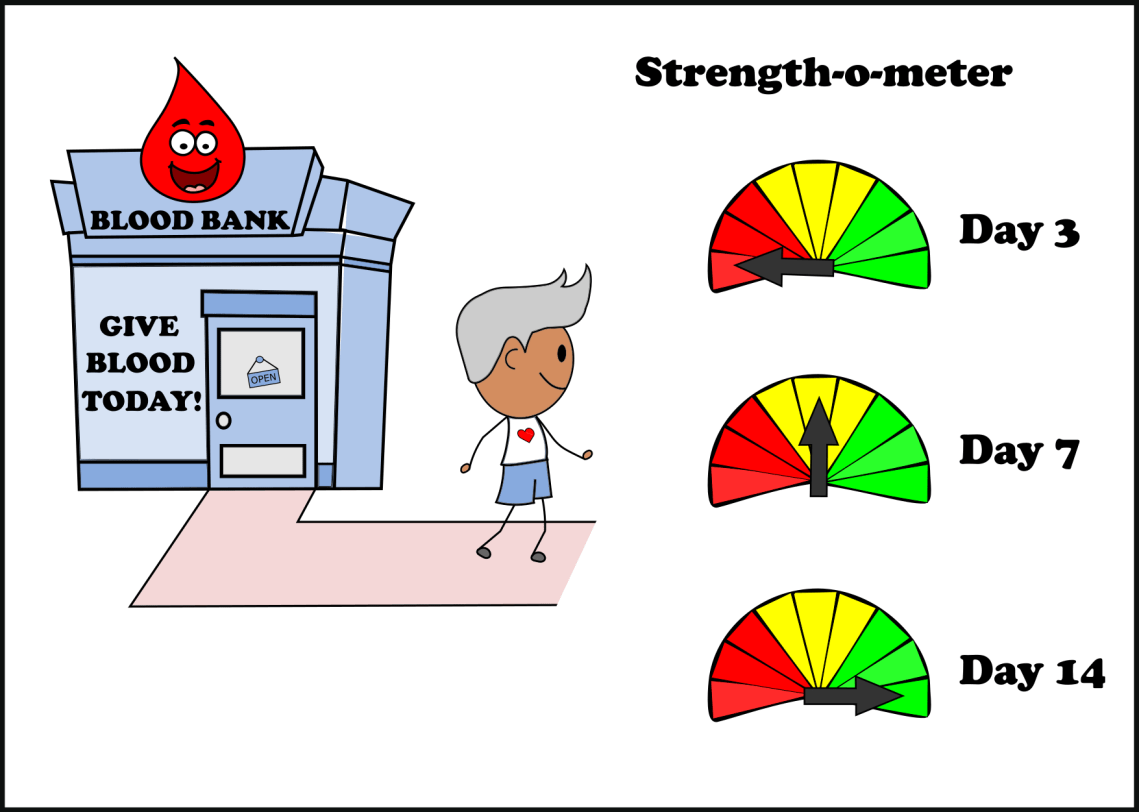
19 participants were tested for peak cycling performance (VO2 Max) and also performed a 3 km treadmill run to determine baseline fitness levels. They then donated blood (about 1 pint or 450 mL) and were re-tested for fitness levels after 3 days, 7 days, 14 days and 28 days.
What happened?
Peak cycling performance was reduced by 6.5% on average on day 3 and did not recover until 14 days after donation. 3 km running performance took 42 seconds longer on average on day 3 compared to pre-donation, and again did not recover until 14 days after donation.
What can you tell me about the people?
All participants were male, regular blood donors and exercised regularly. Participants were 33 years old on average, were generally healthy, but their BMI ranged from 18-30 (borderline underweight to borderline overweight).
What else should I know?
Haemoglobin (Hb) is found in the blood and is responsible for carrying oxygen to muscles and other organs. This study also measured the levels of Hb in the blood and found that levels only recovered 28 days after donation. Although this did not affect sport performance (which recovered after 14 days), this suggests that full recovery from blood donation takes up to 28 days.
What will I do differently?
The reduction in sports performance is disappointing. However, blood donation is an essential service, especially if you have a rare or needed blood type. I’m not an elite athlete, so I won’t let this small dip in performance prevent me from donating blood in the future.
This research was published in April 2015 by AK Ziegler and colleagues from the University of Copenhagen in Denmark.
This article highlights our personal take on their research. Check it out here and see what you think!

 Abstract Athlete