
This article looks at the effects of resistance training on symptoms of anxiety
What’s the deal?
Mental health is just as important as physical health, especially during current Covid-19 times. With rising levels of anxiety, could resistance (or weights) training be an effective way to improve symptoms of anxiety?
What did they do?
This study looked at a collection of 16 previously reported experiments and conducted what is known as a “meta-analysis”. Data from over 900 participants was used (roughly half did resistance training, half did not) and their symptoms of anxiety were compared.
What happened?
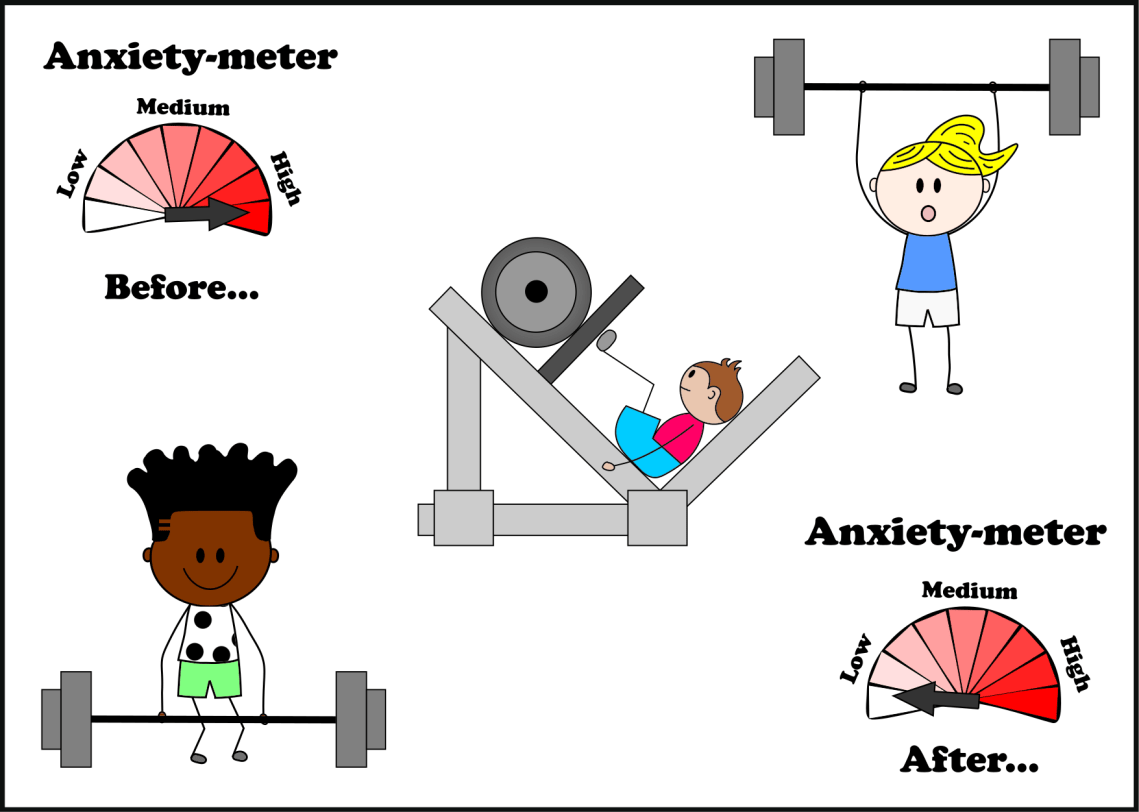
Resistance training reduced symptoms of anxiety in both healthy participants and those with physical or mental health issues.
What can you tell me about the people?
This study had a wide range of participants, including men, women and children, and ages ranged from 10-95 years.
What else should I know?
A “meta-analysis”, like the one used here, uses complex mathematics and statistical analysis and aims to get a sense of the overall picture of an area of research or set of experiments. Since 16 individual experiments were used, there was a wide range of resistance training plans and durations, but all of them seemed to produce positive results.
What will I do differently?
Fortunately, I’m not an anxious person, but there are probably still benefits for me. Although I have never lifted weights, I’ve always been intrigued by the process and I know that the achievement milestones would have a positive impact on my mental (and physical) health. I also have two friends who get a real buzz from resistance training, so maybe it’s time for me to get started!
Acknowledgements
This research was published in December 2017 by BR Gordon and colleagues from the University of Limerick, Ireland.
This article highlights our personal take on their research, but there is so much more information available! Check it out here and see what you think!

 Abstract Athlete