
This article looks at the effects of exercise on language learning
What’s the deal?
If exercise were sold in tablet form, it would be prescribed for everything. From obesity to mental health, exercise is great for any ailment, but can exercise help with learning a language?
What did they do?
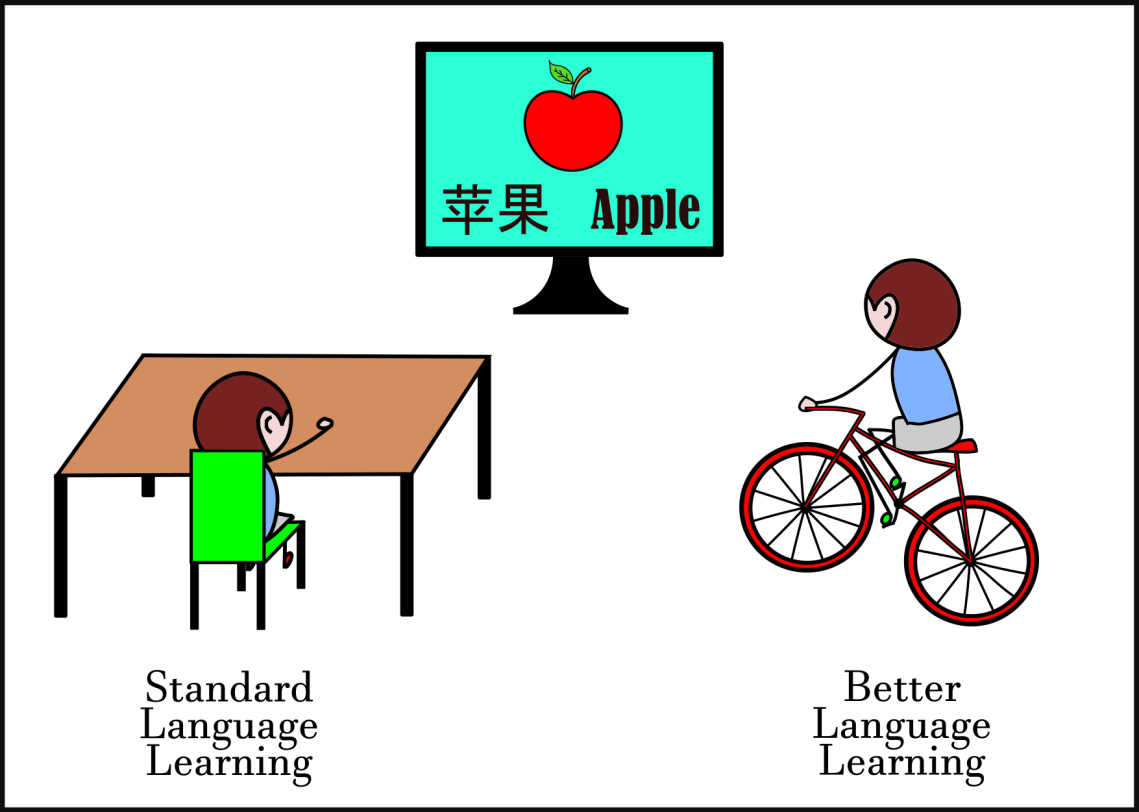
During weekly language learning sessions, 40 volunteers were shown word-picture combinations in a foreign language (e.g. dog, with a picture of a dog). Half of the participants did this whilst cycling on an exercise bike, whereas the other half were not exercising. Participants were then tested on their ability to identify correct and incorrect word-picture combination pairs.
What happened?
Participants who were exercising during the learning process were able to identify word-picture combinations faster and with better accuracy than those who learned without simultaneous exercise. In addition, when tested again 4 weeks later (without further learning), exercising learners again performed better than non-exercising learners.
What can you tell me about the people?
Participants were Chinese university students (20 years old) and were learning English. They had basic knowledge of English and were regarded as adult, or late learners. There were 21 males and 19 females.
What else should I know?
Participants in the exercising group were cycling at 60% of their maximum speed, as determined by VO2 max.
What will I do differently?
This is a game changer! I have been learning Mandarin Chinese for the past year and I’m hoping this works the other way too!
Acknowledgements
This research was published in May 2017 by F Liu and colleagues from Dali University in China.
This article highlights our personal take on their research, but there is so much more information available! Check it out here and see what you think!

 Abstract Athlete